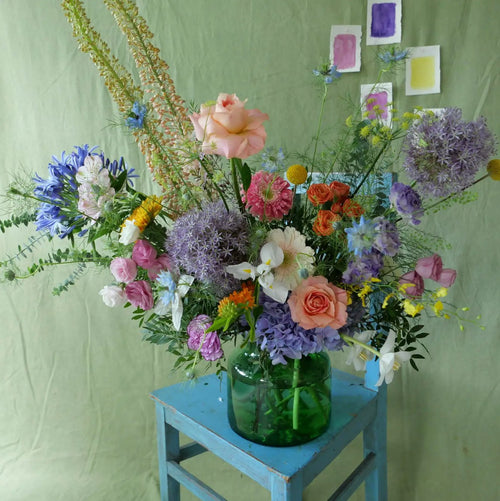




Sending condolence flowers that offer comfort when words fall short
A practical guide to choosing sympathy arrangements that honour the person lost and support those left behind.
What condolence flowers are actually for
Which flowers carry the right meaning
Cultural and religious customs worth knowing
Timing your condolence flowers thoughtfully
Choosing between a wreath and a bouquet
Condolence flower picks by situation
The right choice depends on where the flowers are going and your relationship with the family.
Flowers sent a week after the service, when everyone else has returned to their routines, are often what a grieving family remembers most.
How to choose and send condolence flowers
-
Consider where the flowers will go
Decide first whether you are sending to a funeral home, a place of worship, or the bereaved family's home. The setting shapes the appropriate scale and format. A service calls for something more structured, such as a wreath or formal arrangement. A home delivery calls for something softer and more personal.
-
Check cultural or religious context
If you know the family's background, take a moment to consider whether flowers are welcome at the service itself. Some traditions have customs that make home delivery a more thoughtful option. When uncertain, sending to the home after the service is almost always appropriate and often more appreciated.
-
Choose a calm, restrained palette
Reach for white, cream, blush, or soft lavender tones. White lilies, chrysanthemums, and roses are traditional choices that carry widely understood meaning. Avoid bright, celebratory colours. The arrangement should feel quiet and considered, not festive.
-
Decide on format: wreath or bouquet
A condolence wreath is suited to a formal service. A hand-tied bouquet or loose arrangement is better for the home. If the family is likely to be overwhelmed, a smaller, simpler arrangement is often more welcome than an elaborate one. Simplicity is rarely the wrong choice in this context.
-
Send promptly, or deliberately later
Acting quickly after learning of a loss shows care. But if you miss the immediate window, do not assume it is too late. Flowers sent a week or two after the service can be especially meaningful, arriving when the household has quietened and the family most needs to feel remembered. Same-day delivery makes either timing achievable.
Benefits
Flowers communicate what words cannot
A physical arrangement sent to a grieving family is an act of acknowledgement that does not require the sender to find the right words. The gesture itself carries meaning, arriving as a visible sign of care and solidarity.
Timing can be as meaningful as the flowers
Flowers sent promptly signal attentiveness. Flowers sent a week after the service signal sustained care. Both gestures are valuable, and choosing the right moment can make a simple arrangement feel deeply considered.
Format shapes how the flowers are received
A wreath is suited to a formal service; a hand-tied bouquet works better at home. Matching the format to the setting ensures the flowers are actually seen and appreciated rather than out of place.
Colour and restraint matter more than scale
A smaller arrangement in white, cream, or soft pastels will almost always feel more appropriate than a large, colourful one. Restraint in palette communicates respect in a way that abundance alone does not.
When people send condolence flowers
A colleague's bereavement at short notice
A colleague mentions that a family member has passed away, and there is little time to arrange something before the service. A same-day delivery of a white or soft-toned flower arrangement sent to the funeral home or the colleague's home acknowledges the loss without delay. Acting quickly, even with a simple arrangement, is more meaningful than waiting for the perfect choice. A brief, handwritten note alongside the flowers adds something no arrangement can do alone.
Supporting a close friend through loss
When someone close is grieving, flowers sent to the home in the days after the funeral can offer quiet comfort during the period when most support has already faded. A loose, natural hand-tied bouquet in soft pastels feels personal rather than formal. The gesture of sending something a week later, when others have moved on, is often what a grieving friend remembers most. Preserved or dried florals are worth considering here, as they last without requiring care.
A formal service requiring a wreath
For a funeral service at a place of worship or funeral home, a structured condolence wreath is the conventional and appropriate choice. Wreaths are designed to be displayed at the service itself and communicate respect in a way that a bouquet does not. White flowers, particularly lilies and chrysanthemums, are the most widely understood choice for this setting and are appropriate across most cultural contexts.
Navigating an unfamiliar cultural tradition
When the bereaved family comes from a tradition you are less familiar with, the safest approach is to send flowers to the home rather than the service. A calm, simply arranged bouquet in white or cream tones is rarely unwelcome. If you are genuinely unsure whether flowers are appropriate at all, a preserved floral arrangement offers a lasting alternative that the family can keep or display without the time pressure of fresh flowers.
Common questions about condolence flowers
What flowers are most appropriate for condolences?
White lilies, chrysanthemums, and white roses are the most traditional choices, carrying associations with peace and remembrance across many cultures. Soft pastels, blush pinks, and pale lavender are also widely appropriate and can feel warmer than stark white arrangements.
Is it better to send condolence flowers to the service or to the home?
Both are appropriate, but they serve different purposes. Flowers sent to a service are a public gesture of respect; flowers sent to the home are more personal and often arrive when the family needs support most. Sending to the home in the days after the service is particularly meaningful because it reaches the family during the quieter, harder period of grief when most other support has faded.
Are there situations where condolence flowers are not appropriate?
Yes. Some religious and cultural traditions discourage cut flowers at funeral services, so it is worth considering the family's background before sending. In those cases, delivering flowers to the home after the service is usually a more considerate choice and is broadly welcome across traditions.
What is the difference between a condolence wreath and a bouquet?
A condolence wreath is a structured, formal arrangement designed to be displayed at a service or funeral home. A bouquet or loose arrangement is more personal and better suited to the home. The choice depends largely on where the flowers will be received and the relationship you have with the bereaved family. See our condolence wreaths for examples of each approach.